
Scalloped echinacea and vivid dreams: what is known about sleep, REM and brain function
Some people who add Lion's Mane (Hericium erinaceus) to their diet report unusual effects: their dreams are easier to remember, seem richer, or have more complex plots. On the Internet, Lion's Mane has even earned an unofficial reputation as the "lucid dreaming mushroom" for this.
Sounds interesting, but where is the biochemistry and where is the subjective experience? Scientific studies do link Hericium erinaceus to the nervous system, neurotrophic factors, and certain sleep quality indicators. However, direct evidence that the mushroom makes dreams more vivid or increases REM sleep in humans is currently lacking.
Why do we have vivid dreams at all?
Dreams can occur at different stages of sleep, although the most intense and plot-driven dreams are often associated with REM (Rapid Eye Movement) sleep. During this period, the brain is highly active, and memory and emotional processing continues even when the body is resting.
The vividness of a dream and the ability to recall it after waking up are not the same thing. A person can have many rich dreams, but forget them almost immediately. Conversely, a brief awakening at the right moment helps to retain the plot in memory.
Therefore, the subjective feeling "I started dreaming more" sometimes means something completely different: a person has started to remember their dreams better.
What is the purpose of the comb blackberry here?
Hericium erinaceus is interesting primarily for its composition. It is studied for hericenones, erinaceins, polysaccharides, beta-glucans, and other biologically active components.
The most attention has been paid to erinacins and their potential connection to neurotrophic processes. Research also examines the interaction of mushroom components with the NGF and BDNF systems, which are involved in nervous system function and neuroplasticity.
This is where one of the hypotheses regarding unusual dreams arose.
NGF, BDNF and neuroplasticity in simple terms
Neuroplasticity is the ability of the nervous system to change the connections between neurons in response to learning, experience, and other factors.
NGF is nerve growth factor. BDNF is brain-derived neurotrophic factor. Both systems are involved in the complex processes of maintaining nerve cells, memory, and brain plasticity.
Hericium erinaceus is being studied for its possible effects on these mechanisms. But the connection here should not be simplified to the formula "more NGF = more vivid dreams." Science has not established such a mechanism.
It is more correct to say otherwise: the mushroom affects processes related to the functioning of the nervous system, and sleep and memory also depend on neuroplasticity. Therefore, the potential connection is interesting, but still remains a subject of research.
What research says about blackberries and sleep
The scientific evidence is more interesting than the simple statement "Lion's Mane improves dreams."
Human studies have examined the association between taking Hericium erinaceus and mood, anxiety, and quality of sleep at night. One study in overweight or obese people reported improvements in sleep disturbance scores after eight weeks of taking the mushroom.
Another small study in women also examined psychological state and sleep while taking Hericium erinaceus.
These are interesting results, but they do not yet prove a direct effect on dreams.
Does Lion's Mane increase REM sleep?
This is where exaggeration often occurs on the Internet.
A 2021 experiment examined the mycelium of Hericium erinaceus in mice with sleep disorders. The scientists used electroencephalography and analyzed REM and NREM separately.
The result was interesting: the use of mycelium helped normalize NREM sleep disturbances and demonstrated a potential anti-anxiety effect in this animal model.
Therefore, it is incorrect to claim that studies have proven the ability of blackthorn to “extend REM.”
Why then do people talk about vivid dreams?
Several hypotheses can be proposed here, but it is important to call them hypotheses.
If a person sleeps better, wakes up less often due to stress, or has a more stable routine in general, the structure of their night's rest may change. At the same time, the subjective perception of dreams may also change.
A second possible mechanism is related to memory. If certain components of the mushroom do indeed affect neurotrophic processes, this could theoretically affect not the generation of dreams themselves, but how well a person remembers their dream experiences.
However, a dedicated high-quality clinical study, where one group received Lion's Mane, the other a placebo, and researchers measured REM and dream vividness, is not yet sufficient.
Echinacea and acetylcholine: is there a connection with dreams?
Acetylcholine is indeed important for brain function and REM sleep. But to claim that taking blackberries directly increases acetylcholine to the point where dreams become more vivid would be a bold claim today.
Studies of the neuroprotective properties of Hericium erinaceus implicate cholinergic mechanisms, but this is not the same as the proven effect on dreaming in healthy individuals.
What about serotonin and melatonin?
Serotonin, melatonin, and circadian rhythms are indeed closely linked to sleep. But there is a complex system at work here that cannot be described by the scheme "blackberries increase serotonin → more melatonin is produced → vivid dreams appear."
There is insufficient clinical data to draw such a conclusion.
Much more interesting is the potential link between Hericium erinaceus and psychological state. Several small studies have observed changes in anxiety, mood, and sleep quality. Less psycho-emotional stress could theoretically contribute to a better night's rest.
Is it worth taking blackberries specifically for vivid dreams?
I wouldn't consider Lion's Mane as a specific "dreaming" supplement. That's too narrow a view of a mushroom that has much broader scientific interest.
If you want to buy blackthorn , it is more logical to evaluate it by its composition, quality of raw materials, form, and content of active components, rather than by the promise of lucid dreaming the very next night.
At Effectplants, you can choose different formats of Hericium erinaceus and get advice on the composition of the products. Fruiting body powder and concentrated extract are not the same thing, so before choosing, it is worth reading the characteristics of a particular product.
What can affect the memory of dreams?
Instead of looking for a “magic combination” of supplements, it’s more useful to start with the factors that actually affect sleep:
- stable sleep and wakefulness regime;
- sufficient duration of night rest;
- less alcohol before bed;
- reducing bright light late in the evening;
- no constant lack of sleep;
- recording a dream immediately after waking up.
The last point seems trivial, but it is the dream diary that often changes the subjective feeling of their vividness: a person simply trains himself to pay attention to them and remember them better.
Echinacea and vitamin B6
Vitamin B6 is interesting in that its effects on dreams have been studied separately from blackberry. In a randomized, placebo-controlled trial, B6 increased the amount of dream material that participants could recall in the morning.
At the same time, he did not demonstrate a significant improvement in the brightness, color, or strangeness of dreams. Therefore, even here, it is more correct to talk about remembering dreams , rather than a guaranteed increase in their brightness.
It is not worth using high doses of B6 for this purpose on your own. Supplements also have dosages, contraindications, and the risk of unwanted effects.
Should you combine blackberries with fly agarics for the sake of dreams?
This combination cannot be recommended as a proven way to achieve vivid or lucid dreams.
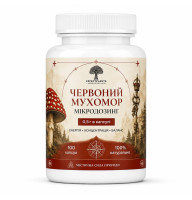
The fly agaric (Amanita muscaria) contains muscimol and ibotenic acid, neuroactive substances with potentially dangerous and unpredictable effects. This is a completely different category of substances than the components of Lion's Mane.
There is insufficient clinical data to support the safety or benefits of the combination of Hericium erinaceus and Amanita muscaria for improving REM sleep or dreams.
What you need to know about 5-HTP
5-HTP is a precursor to serotonin, but it shouldn't be added to your regimen just for the sake of lucid dreams. Caution is especially important for people taking antidepressants or other medications that affect the serotonin system.
The principle of “more additives, stronger effect” does not work here.
Scalloped Hedgehog and Dreams: What We Have Today
Hericium erinaceus has an interesting scientific basis regarding the nervous system, neurotrophic factors, mood, and certain sleep characteristics. There are also many subjective reports from people of unusual or better remembered dreams.
However, at present, it cannot be stated that blackthorn has been proven to make dreams more vivid, increase REM duration, or induce lucid dreaming .
The most interesting version is much more prosaic: changes in sleep quality, psychoemotional state, and memory processes may affect how a person experiences and remembers their own dreams. This is a topic that future research has yet to test.
Frequently asked questions about blackthorn and dreams
Does blackthorn cause vivid dreams?
Such reports are common among users, but there is no scientifically proven direct effect yet. Research on Hericium erinaceus mainly concerns the nervous system, mood, cognitive function, and sleep quality.
Does Lion's Mane increase REM sleep?
There is no convincing clinical evidence for this. In a 2021 animal experiment, the positive changes primarily concerned NREM sleep disorders.
After how many days can dreams change?
There is no scientifically established deadline. The claim that vivid dreams must appear after 3–7 days has not been confirmed by clinical studies.
When is it best to take blackberries?
There is no universal time set for influencing dreams. You should focus on the recommendations of the manufacturer of a particular product and your own tolerance.
Can you combine blackberry with fly agaric for vivid dreams?
This combination does not have a sufficient evidence base for effectiveness and safety. Amanita muscaria contains neuroactive substances and can cause intoxication, so it is not worth experimenting with it for the sake of dreams.
The material is for informational purposes only and does not constitute medical advice. If you are taking medication, have a sleep disorder, neurological or mental illness, consult your doctor before using supplements.



Write a comment