
Cordyceps is one of the most famous functional mushrooms in Asia, with a history of use dating back to traditional Chinese and Tibetan practices. Today, Cordyceps is of interest not only to oriental culture enthusiasts, but also to athletes, people with active lifestyles, and scientists studying the natural bioactive compounds of mushrooms.
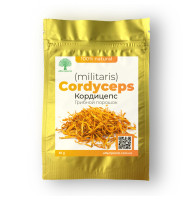
Two species receive the most attention: Ophiocordyceps sinensis , traditionally called Cordyceps sinensis, and Cordyceps militaris . They differ in origin, method of production, and concentration of individual components. Cultivated Cordyceps militaris is more common in modern functional products.
What is really known about this mushroom? Let's analyze its composition, main areas of research, forms of use, and find out what the popular Cordyceps microdosing means today.
What is Cordyceps?
Cordyceps is not a single fungus, but a large group of related fungi. In nature, many of its representatives have an unusual life cycle and develop with the participation of insect hosts. It is this biological feature that has made cordyceps one of the most unusual mushrooms in traditional Asian culture.
Today, it is not necessary to collect rare wild material for food supplements. Modern technologies allow cultivating individual species under controlled conditions and obtaining standardized mushroom raw materials.
Cordyceps sinensis and Cordyceps militaris: what's the difference?
| Characteristic | Cordyceps sinensis | Cordyceps militaris |
|---|---|---|
| Origin | Traditionally associated with the highlands of Tibet and the Himalayas | Can be cultivated under controlled conditions |
| Accessibility | Wild raw materials are rare and expensive | Much more affordable for additive manufacturing |
| Main interest | Traditional use and natural composition | Functional Products and Cordycepin Research |
| Forms | Powders, extracts, traditional compositions | Capsules, powders, extracts, functional complexes |
Don’t automatically assume that the wild version is “better.” For a functional product, the type of mushroom, cultivation conditions, purity, processing method, and actual composition of the finished supplement are important.
What does Cordyceps mushroom contain?
Scientific interest in Cordyceps is due to its complex natural substances. Nucleosides, polysaccharides, sterols, amino acids, and other biologically active components can be detected in different species and extracts.
Of particular interest is cordycepin , a compound structurally similar to adenosine, which is being actively studied in laboratory models for its effects on cellular metabolism and signaling processes.
Mushroom products may also contain:
- polysaccharides;
- beta-glucans;
- adenosine and related compounds;
- amino acids;
- sterols;
- phenolic and other natural components.
Cordyceps: properties and main areas of research
On the Internet, this mushroom is often attributed dozens of medicinal effects. It is more correct to separate traditional use, laboratory research data, and clinically confirmed results.
Today, Cordyceps is of greatest interest to researchers in the context of energy metabolism, physical performance, antioxidant mechanisms, and interactions with immune processes.
Supporting energy and endurance
One of the most popular uses is for an active lifestyle. The components of the mushroom are being studied for their involvement in cellular energy metabolism and the body's adaptation to physical activity.
That is why the cordyceps mushroom is often found in functional complexes for athletes and people who need to maintain performance during a busy day.
Recovery after stress
Cordyceps has also become popular among people who exercise regularly, seeing it not as an instant stimulant but as a component of a wellness diet for periods of increased physical activity.
However, mushrooms cannot compensate for lack of sleep, calories, protein, or recovery time. They are a supplement, not a replacement for the basic principles of a healthy lifestyle.
Antioxidant potential
Mushroom raw materials contain substances that are being studied for their ability to protect cells from oxidative stress. This area remains one of the most important in modern work with functional mushrooms.
Immune system
Polysaccharides and beta-glucans of mushrooms can interact with individual immune response mechanisms. Therefore, Cordyceps is often included in functional complexes aimed at general body support.
At the same time, the concept of "immunomodulation" does not mean treating infections or automatically "boosting immunity."
Cordyceps and sports: why do active people choose it?
It is the sports segment that has largely ensured the current popularity of Cordyceps. The functional mushroom is used by people who value endurance, a sense of tone, and comfortable recovery between workouts.
It is especially important for an athlete not to perceive any mushroom supplement as a replacement for a training program. Results are formed primarily through regular training, nutrition, sleep, and recovery.
Cordyceps as an adaptogen: what does this term mean?
In the wellness industry, Cordyceps is often referred to as an adaptogen. This term usually refers to natural ingredients used to support the body during periods of physical or emotional stress.
This doesn’t mean that the supplement “turns off stress.” It’s more accurate to talk about a functional product that can be part of a broader approach to recovery alongside sleep, nutrition, and physical activity.
Cordyceps and men's health
In traditional Chinese culture, Cordyceps had a reputation for supporting vitality and sexual tone, hence the mushroom's popular positioning as a natural aphrodisiac.
Modern science is investigating the possible effects of individual components on reproductive processes, but the mushroom should not be offered as a treatment for erectile dysfunction, infertility, or hormonal disorders.
What is Cordyceps microdosing?
The term “microdosing” is most often associated with the use of very small amounts of active ingredients. In the case of Cordyceps, it has a slightly different meaning, as this functional mushroom is not a classic psychedelic.
The term “microdosing Cordyceps” usually refers to the regular use of a small, controlled portion of the mushroom powder, extract, or capsules according to the specific product’s instructions.
There is no universal dosage for all forms. One gram of natural powder and one gram of concentrated extract can differ significantly in composition. Therefore, you should focus on the manufacturer's specifications.
Powder, Capsules or Cordyceps Mushroom Extract?
| Form | Advantages | Features |
|---|---|---|
| Powder | Natural format, flexibility of use | You need to measure the portion yourself |
| Capsules | Convenience and fixed product quantity | No need to measure powder |
| Cordyceps mushroom extract | Concentrated form | You need to look at the extraction ratio and standardization |
| Complex formulas | Combination of multiple functional components | It is more difficult to determine the contribution of each ingredient |
Cordyceps and Horsetail: what to choose?
These mushrooms are often compared, although their positioning is different. Lion's Mane is usually chosen in the context of concentration and cognitive support. Cordyceps is more associated with physical activity, tone, and endurance.
| Goal | Cordyceps | Crested Hedgehog |
|---|---|---|
| Physical activity | Mainstream | Minor |
| Endurance | Often chosen | Not the main positioning |
| Concentration | Can be used as part of an overall wellness approach | One of the main directions of popularity |
| Restoration | Popular among active people | More often considered in the context of the nervous system |
Possible Harm and Side Effects of Cordyceps
Natural origin does not mean complete absence of contraindications. Individual reaction depends on the specific mushroom, product form, quantity and health status of the person.
Among the adverse reactions described for Cordyceps supplements, the following may occur:
- digestive discomfort;
- nausea or diarrhea;
- allergic reactions;
- sleep disturbances or excessive alertness in sensitive people.
If an adverse reaction occurs, use of the product should be discontinued.
Who needs to be especially careful?
Additional medical advice is required during pregnancy and breastfeeding, if you are allergic to mushrooms, have autoimmune conditions, or are taking medications regularly.
This is especially true for drugs that affect the immune system or blood clotting. You should not replace prescribed medications with functional mushrooms on your own.
How to choose quality Cordyceps?
Before making a purchase, it is better to look not at the number of promises in advertising, but at the characteristics of a particular product.
- the exact type of mushroom;
- clear origin of raw materials;
- form - powder, fruiting body, mycelium or extract;
- absence of unnecessary impurities;
- for extracts - concentration or extraction ratio;
- certificates and laboratory control;
- clear manufacturer's recommendations.
Effectplants offers various formats of functional mushrooms, so before ordering, you can compare powders, capsules, and concentrated products and choose a convenient format.
FAQ — frequently asked questions about Cordyceps
What is Cordyceps?
Cordyceps is a group of functional mushrooms. The most famous are Cordyceps sinensis and Cordyceps militaris, which have a long history of traditional use and are actively studied by modern science.
What is cordyceps mushroom used for?
It is most often chosen in the context of maintaining overall tone, physical activity, endurance, and recovery from exercise.
What does Cordyceps microdosing mean?
In this case, it is about using a small, controlled amount of a functional mushroom. Cordyceps is not a psychedelic, so the concept of microdosing here is different from the classic psychedelic context.
Which is better — Cordyceps sinensis or militaris?
There is no universally superior species. Sinensis has a stronger traditional reputation, while militaris is easier to cultivate and widely used in modern functional supplements.
How is Cordyceps mushroom extract different from powder?
Powder is ground mushroom raw material. Extract undergoes additional processing and may be more concentrated, so comparing them by weight alone is incorrect.
Is Cordyceps suitable for athletes?
Cordyceps is particularly popular among physically active people. It is used as a functional supplement to the diet, but not as a replacement for training, nutrition, or recovery.
When is it best to take Cordyceps?
It depends on the specific product. If a person feels a tonic effect, they often choose the first half of the day. The main guideline is the manufacturer's instructions.
Can Cordyceps have side effects?
Yes. Individual intolerance, allergic reaction, or digestive discomfort are possible. People with chronic diseases and those taking medication should consult a doctor beforehand.
Cordyceps — a functional mushroom for an active lifestyle
Cordyceps is primarily interesting as a functional mushroom with a rich natural composition and a centuries-old history of use. Today, the most attention is drawn to its potential effects on energy metabolism, physical performance, antioxidant mechanisms, and adaptation to stress.
The main thing is not to perceive it as a universal medicine. Choose a product with a transparent composition, check the type of mushroom and the form of the raw material, and follow the manufacturer's recommendations.
Important: This article is for informational purposes only. Effectplants products are not medicinal products and are not intended for the treatment, diagnosis, or prevention of disease.



Write a comment